
Research & Insights
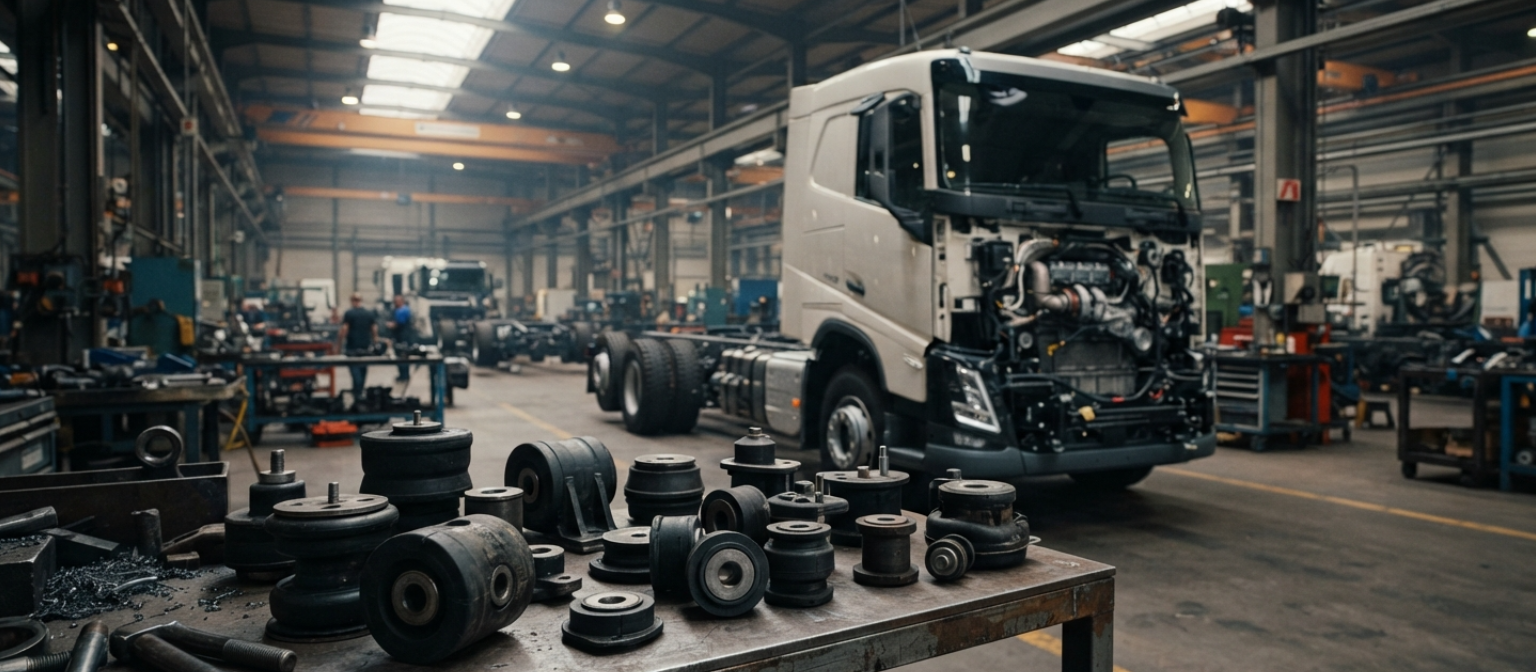
Heavy-Duty Rubber Parts for Heavy-Duty Trucks: Applications, Benefits and Selection Guide
Heavy-duty trucks operate under demanding conditions where vibration, load, road impact, heat, moisture and continuous movement can affect critical components. Heavy-duty rubber parts for heavy-duty trucks help manage these operating stresses by providing cushioning, vibration isolation, sealing, protection and controlled movement between mechanical components.
From engine mounts and suspension components to rubber bushes, buffers, seals and vibration-control parts, properly engineered rubber components can support vehicle durability and improve operating performance. For truck manufacturers, fleet operators, repair professionals and component buyers, selecting the right rubber part requires attention to material, design, load capacity and operating conditions.
What Are Heavy-Duty Rubber Parts for Heavy-Duty Trucks?
Heavy-duty rubber parts are engineered elastomer components designed to withstand the demanding operating conditions of commercial trucks, trailers and other heavy vehicles. They are commonly used between metal components or around mechanical systems to absorb vibration, reduce impact, provide flexibility and protect components from wear.
Unlike general-purpose rubber products, heavy-duty truck components need to perform consistently under substantial loads and repeated mechanical stress. Their specifications can vary according to the truck application, component design, temperature range, environmental exposure and required service life.
Common examples include:
-
 Rubber engine mounts:
-
Engine mounting bushes:
-
Suspension bushes:
-
Rubber buffers and bump stops:
-
Anti-vibration mounts:
-
Rubber pads:
-
Cab mounts:
-
Sealing components:
-
Grommets:
-
Rubber-metal bonded parts:
-
Custom-moulded rubber components:
-
Protective rubber components:
Why Are Rubber Components Important in Heavy-Duty Trucks?
Heavy trucks generate significant vibration and mechanical movement during operation. Rubber components provide an interface between rigid parts, helping control these forces.
One important function is vibration isolation. Rubber mounts can reduce the transmission of engine and road-induced vibration to vehicle structures and surrounding components.
Rubber components can also provide impact absorption. Buffers and bushes help cushion movement between components and can reduce the effects of repeated shocks.
Another important function is controlled flexibility. Certain suspension and mounting applications require components to permit limited movement while maintaining alignment and stability.
In addition, rubber seals and protective components can help prevent the entry of contaminants and provide protection against environmental exposure.
Major Applications of Heavy-Duty Rubber Parts
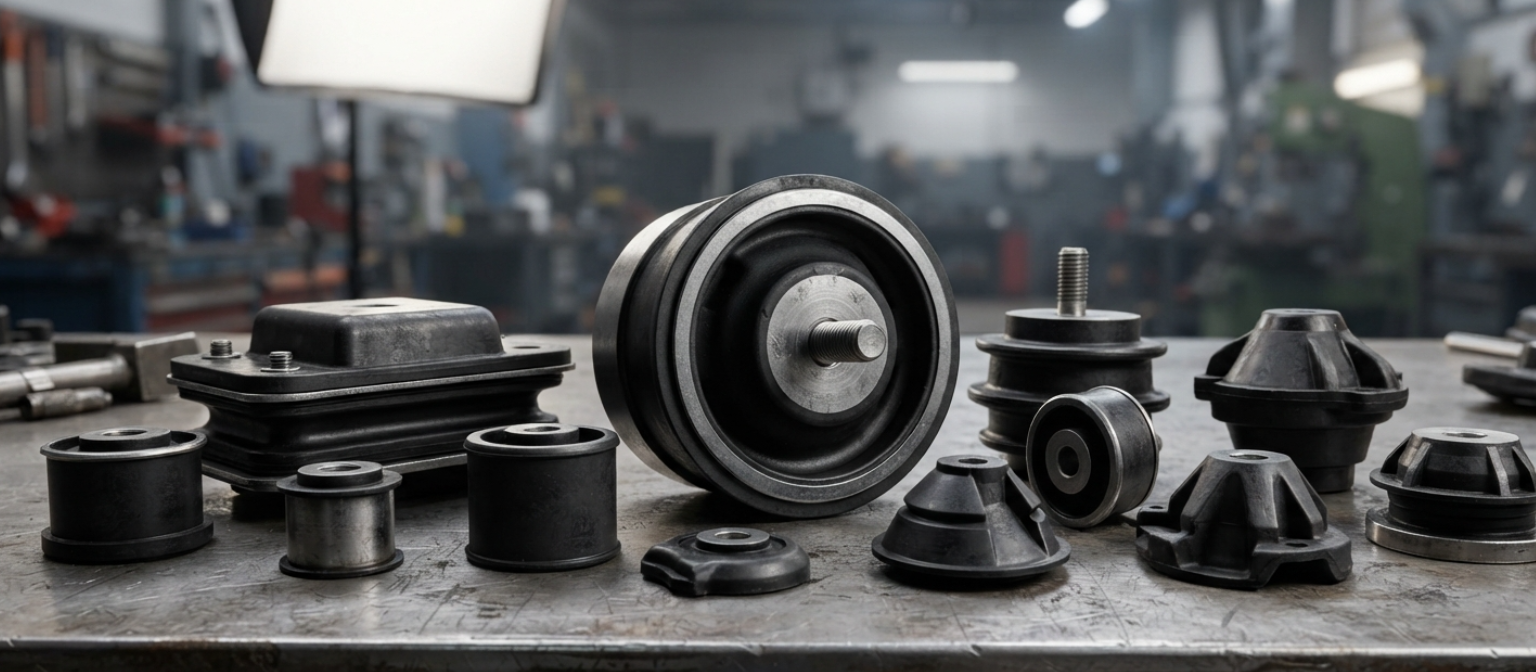
1. Engine Mounts
Engine mounts support the engine while helping isolate vibration from the vehicle chassis. Heavy-duty rubber engine mounts need to accommodate engine weight, vibration and movement during acceleration, braking and changing road conditions.
The correct mount design depends on factors such as engine configuration, load, mounting arrangement and expected vibration characteristics.
2. Suspension Bushes
Suspension bushes are used at various connection points within truck suspension systems. They provide controlled movement between components while helping reduce metal-to-metal contact.
Because suspension components experience repeated loads and road impacts, bush material and design are important considerations.
3. Rubber Buffers and Bump Stops
Rubber buffers provide cushioning when mechanical components approach the limits of their intended movement. They can help absorb impact and prevent direct contact between metal components.
For heavy-duty vehicles, buffer design needs to account for compression, load, temperature and repeated impact.
4. Cab Mounts
Cab mounts help isolate the truck cabin from vibration and road-induced movement. Properly engineered rubber cab mounts can contribute to improved vibration control and support the connection between the cab and chassis.
5. Rubber-Metal Bonded Components
Some truck applications require rubber to be permanently bonded to metal inserts. These rubber-metal components can combine structural support with vibration isolation and controlled flexibility.
They are commonly produced according to application-specific dimensions and performance requirements.
Key Benefits of Heavy-Duty Rubber Parts
Vibration Control
One of the primary benefits of rubber components is their ability to absorb and isolate vibration. This can help reduce vibration transmission between mechanical systems and vehicle structures.
Impact Absorption
Rubber has elastic properties that make it suitable for absorbing shocks and impacts. This is particularly useful in suspension, mounting and buffer applications.
Noise Reduction
Reducing vibration and mechanical contact can also help control unwanted noise. Properly designed rubber components can contribute to a quieter operating environment.
Component Protection
Rubber components can act as protective interfaces between rigid surfaces. This can reduce direct contact and help protect associated components from excessive impact or vibration.
Flexible Performance
Rubber provides controlled flexibility while maintaining its shape and function under specified operating conditions. This makes it useful for applications involving repeated movement.
Customised Design
Heavy-duty truck rubber components can be manufactured in different shapes, dimensions, hardness levels and rubber formulations to meet specific application requirements.
How to Select the Right Heavy-Duty Rubber Component
Choosing a rubber component based only on dimensions may not be sufficient. Several technical factors should be considered.
-
1. Load requirements: Determine the static
and dynamic loads that the component will experience.
-
2. Operating temperature: Select a rubber
compound suitable for the expected temperature range.
-
3. Chemical exposure: Consider exposure to
oil, grease, fuel, hydraulic fluids or other substances.
-
4. Environmental conditions: Moisture,
dust, ozone, sunlight and changing weather conditions can
affect rubber performance.
-
5. Hardness: Rubber hardness influences
stiffness, flexibility and compression behaviour. The
appropriate hardness depends on the application.
-
6. Compression and movement: Understand how
much compression, shear, torsion or movement the component
will experience.
-
7. Component dimensions: Accurate
dimensions are essential for proper fitment and performance.
-
8. Material compatibility: The rubber
formulation should match the operating environment and
required performance characteristics.
Why Material Selection Matters
Different rubber materials provide different performance characteristics. Natural rubber, EPDM, NBR, neoprene and other elastomers may be suitable for different applications.
For example, an application involving oil exposure may require a compound with appropriate resistance to petroleum-based fluids. An outdoor application may require resistance to weathering and ozone.
Therefore, rubber selection should be based on actual operating conditions rather than using the same material specification for every truck application.
Manufacturing Quality Is Critical
The performance of heavy-duty rubber parts for heavy-duty trucks depends not only on the rubber compound but also on manufacturing accuracy.
Important quality considerations include:
-
Consistent rubber formulation:
-
Accurate mould dimensions:
-
Controlled curing conditions:
-
Proper bonding between rubber and metal:
-
Dimensional inspection:
-
Surface quality:
-
Hardness verification:
-
Application-specific testing:
For rubber-metal bonded components, surface preparation and bonding processes are particularly important because the rubber and metal must function as an integrated component.
Custom Rubber Parts for Heavy-Duty Truck Applications
Truck manufacturers and component suppliers may require rubber parts that are not available as standard products. Custom rubber moulding allows components to be developed according to specific drawings, dimensions and application requirements.
A custom manufacturing process can consider factors such as load, compression, hardness, geometry, temperature and environmental exposure.
This approach can be useful for OEM applications, replacement components, fleet requirements and specialised truck systems.
Frequently Asked Questions
What are heavy-duty rubber parts used for in trucks?
Heavy-duty rubber parts are used for vibration isolation, impact absorption, controlled movement, sealing, cushioning and protection in systems such as engines, suspensions, cabins and chassis assemblies.
Which rubber parts are commonly used in heavy trucks?
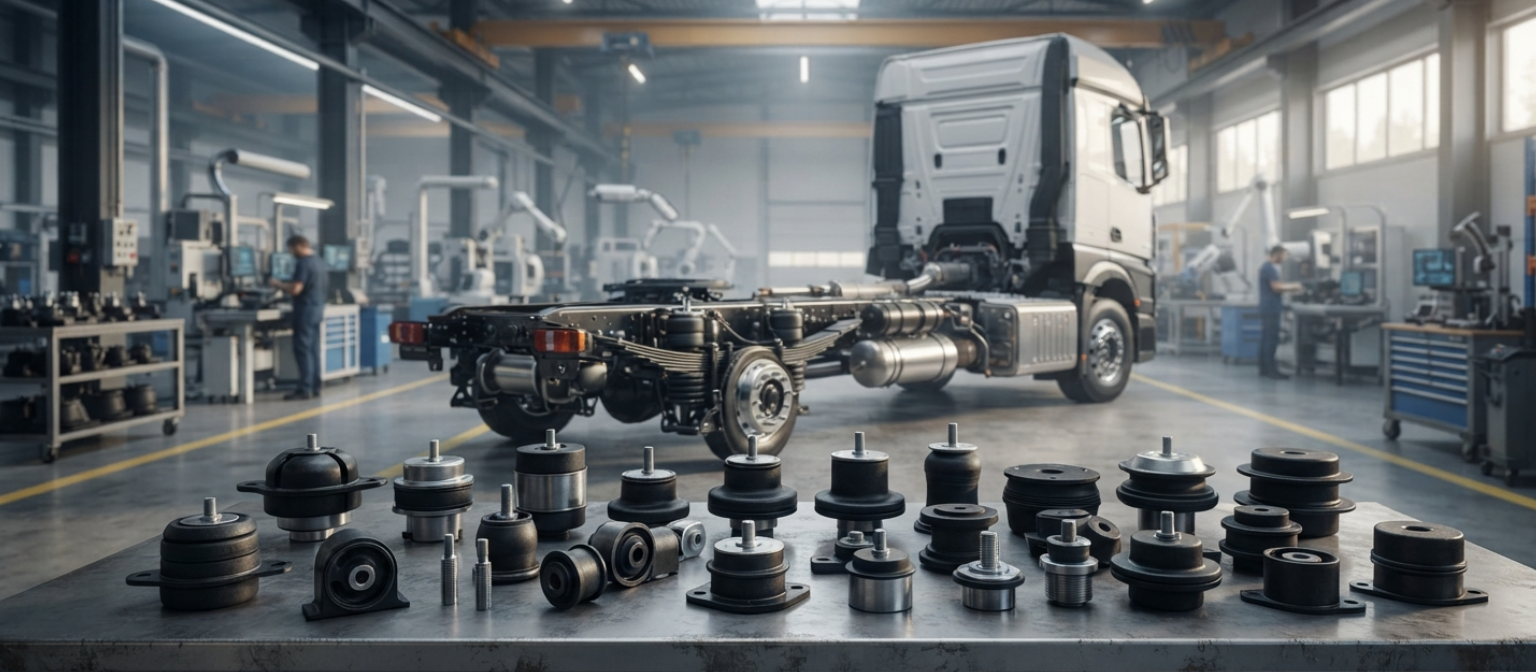
Common components include engine mounts, suspension bushes, cab mounts, rubber buffers, bump stops, anti-vibration mounts, grommets, seals and rubber-metal bonded components.
How do rubber engine mounts help heavy-duty trucks?
Rubber engine mounts support the engine while helping isolate engine vibration and movement from the vehicle chassis.
What factors affect the life of truck rubber components?
Material selection, load, temperature, chemical exposure, environmental conditions, movement, installation and manufacturing quality can all affect component service life.
Can rubber parts be customised for heavy-duty trucks?
Yes. Custom rubber components can be manufactured according to application requirements such as dimensions, hardness, material specification, load conditions and rubber-metal bonding requirements.
How do I select the correct rubber component for a truck?
Start with the application, load, dimensions, operating temperature, environmental exposure, chemical contact, movement and required rubber properties. Technical specifications and drawings should be reviewed before selecting or manufacturing the component.
Elasto Mount for Heavy-Duty Rubber Components
For heavy-duty vehicle applications, rubber components need to balance durability, flexibility, vibration control and resistance to demanding operating conditions. Elasto Mount provides engineered rubber and rubber-metal component solutions for applications where reliable performance and accurate specifications are important.
Whether the requirement involves rubber mounts, bushes, buffers, vibration-control components or customised rubber parts, selecting the appropriate material and design is essential for dependable performance in heavy-duty truck environments.
When sourcing heavy-duty rubber parts for heavy-duty trucks, buyers should consider application requirements, material compatibility, manufacturing quality and dimensional accuracy to ensure the component is suitable for its intended operating conditions.